
Past course · Summer 2023 · Philosophy · 18 hours
The Birth of the Zoo
- Dates
- 12–17 June 2023
- Time
- Monday–Saturday, 19:00–22:00 (weekdays), 14:00–17:00 (Saturday)
- Sessions
- 18 hours (a one-week intensive course)
- Venue
- Paris 16e
- Language
- English
- Places
- 10
A one-week intensive course!
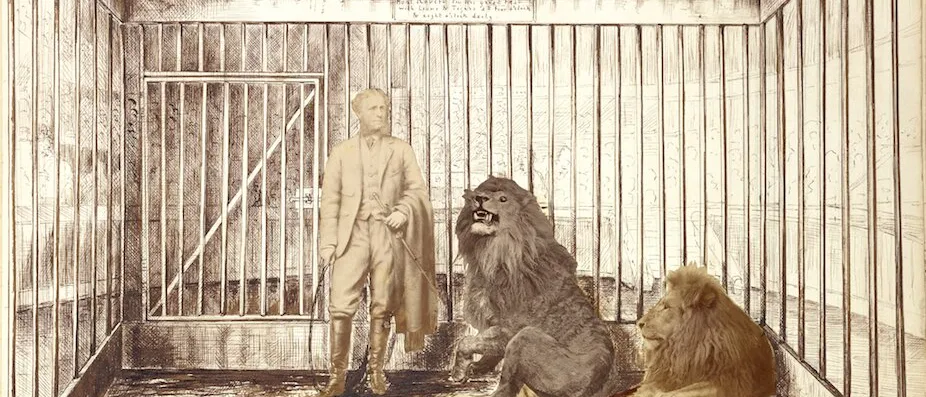
The caging and exhibition of animals has been a common feature of human societies dating back to antiquity. At the turn of the nineteenth century, however, as momentous scientific, socio-cultural, and political changes marked the birth of modernity in the West, the practice was profoundly transformed. Royal menageries gave way to public zoological gardens: In 1794, the French Revolution transferred the Ménagerie royale de Versailles to the Jardin des Plantes in Paris, opening it to the public and framing it as an anti-despotic, scientific, and educative space. In 1828, the creation of the London Zoological Gardens (nicknamed “zoo” in the press of the day), completed the transformation: Located in Regent Park, right in the city center, the zoo was explicitly designed to welcome the large population of London. The zoo established, classified, and glorified human domination over nature, the final victory of culture, the dawn of a new human imperialism over the natural world.
This course will explore the effects of this transformation on our understanding of human-animal relations, animality, and—since humans were also exhibited in zoos—humanity itself. Naming, registering, and regulating its inhabitants, the zoo creates laws and standards to govern their captivity, manage their reproduction, and decide which of them will live and which will expire. It assigns new functions to the animal body, turning it into a paradigm for the classification, governance, and allocation of life. In so doing, the zoo mirrors and exposes the main political concerns of its time, namely the disciplining of the body and the management of large populations. After tracing these developments, the course will close with a glance at the twentieth century, with developments such as the cageless zoo pioneered by Carl Hagenbeck in the 1910s and the “invention” of the biopark in the late 1980s demonstrating that the space and practices of the zoo remain as relevant as ever to our concepts of the animal and the human.
About the instructor
Carlo Salzani
Carlo Salzani is an Italian philosophy scholar and translator currently based in Vienna. His research and teaching concern continental philosophy and animal studies, with an emphasis on animal ethics.
